
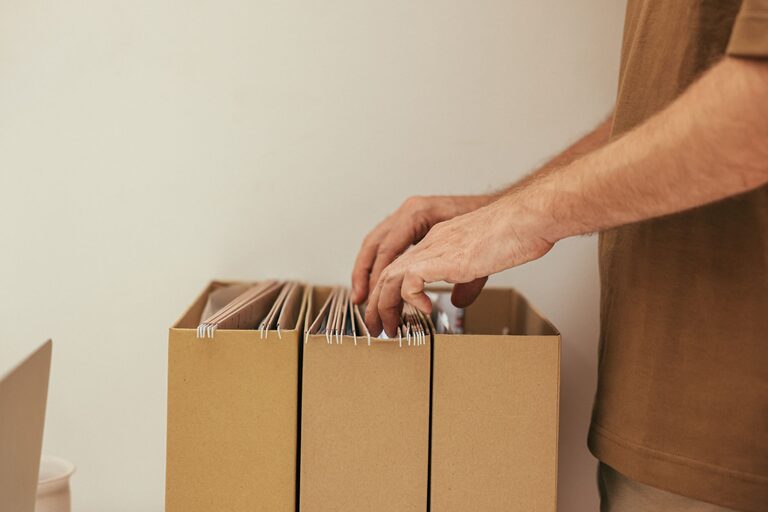
Paper clutter can build up quickly. Mail, receipts, school notices, manuals, coupons, and takeout menus often collect on counters and tables before you realize it. The good news is that you do not need a complicated filing system to regain control.
A few simple habits can help you reduce the amount of paper entering your home, decide what to keep, and store important documents where they are easy to find.
Start With a Quick Paper Sweep
Before creating a new system, gather the paper scattered around your home. Check common collection points, including:
– Kitchen counters
– Entryway tables
– Desk drawers
– Coffee tables
– Bags and backpacks
– Refrigerator doors
– Junk drawers
– Home office shelves
Place everything in one temporary pile or box. This gives you a clear view of how much paper you have and prevents you from organizing the same items in several different places.
Do not worry about making perfect decisions during this first step. The main goal is to bring the clutter together so you can sort it more efficiently.
Sort Paper Into Simple Categories
Too many categories can make organizing feel like work. Start with four basic groups:
Take Action
This includes bills, forms, invitations, return receipts, and documents that require a response. Keep these items in a visible but contained spot, such as a small folder or tray.
Keep
This category is for papers you may need later, such as warranties, tax records, property documents, or important instructions.
Scan
Some papers are useful to reference but do not need to take up physical space. These may include receipts, project notes, product information, or children’s artwork.
Recycle or Shred
Discard outdated advertisements, duplicate documents, expired coupons, and papers that no longer serve a purpose. Use a shredder for papers containing private information.
If you are unsure about an item, place it in a “review later” folder. Set a date to revisit that folder instead of allowing it to become a permanent holding area.
Create an Action Paper Station
Action papers are easy to lose when they are placed in random locations. Set up one small station for documents that need attention.
A tray, wall pocket, or labeled folder can work well. Add papers that require a payment, signature, call, appointment, or reply. Review this station once or twice a week.
You can make the system even easier by using separate folders for:
– To pay
– To mail
– To file
– To discuss
– To take with you
Avoid keeping action papers in a deep drawer. If you cannot see them, you may forget them. At the same time, placing them in a neat container keeps them from spreading across your home.
Reduce Paper Before It Enters Your Home
The most effective way to control paper clutter is to prevent some of it from arriving.
Consider these small changes:
– Sign up for paperless statements where available.
– Unsubscribe from catalogs and promotional mail.
– Remove your name from unwanted mailing lists.
– Ask businesses for digital receipts when practical.
– Say no to flyers, coupons, and handouts you will not use.
– Review magazine and newspaper subscriptions regularly.
– Keep a small “do not bring home” mindset when shopping.
You do not need to eliminate all paper. Choose the types that create the most clutter and address those first.
Deal With Mail Immediately
Mail becomes clutter when it sits unopened. Create a short routine for handling it as soon as possible.
Stand near a recycling bin or shredder when you open mail. Separate each item into one of three groups:
- Take action
- File
- Recycle or shred
Remove envelopes, inserts, and promotional materials immediately unless you truly need them. Avoid placing unopened mail on a counter “for later.” If you are busy, put it in one designated mail tray rather than leaving it in several locations.
A five-minute mail routine can prevent a large pile from forming.
Scan What You Need, Not Everything
Digital storage can reduce physical clutter, but scanning every piece of paper may simply create digital clutter. Be selective.
Scan documents that you may need to reference but do not need in original form. Use clear file names, such as:
– 2026 appliance warranty
– 2026 home repair receipt
– School calendar fall 2026
– Garden project measurements
Create a few broad folders on your computer or cloud storage, such as:
– Home
– Work
– School
– Receipts
– Manuals
– Personal
Use dates or descriptive words in file names so you can find documents later. Back up important digital files regularly, and protect private information with a secure account and strong password.
Keep Important Documents Together
Some papers should remain easy to access in their original form. Use one labeled file box, portable file case, or small filing cabinet for important household records.
Possible categories include:
– Home and property
– Vehicle records
– Warranties
– Taxes
– Education
– Personal records
– Emergency information
You do not need to keep every document forever. Review retention guidelines from the relevant organization or professional before discarding records you may need for legal, tax, or official purposes.
The key is consistency. If all important records live in one known location, everyone in the household can find them when needed.
Give Manuals and Receipts a Clear Home
Product manuals often create bulky piles. First, check whether a manual is available online. If it is, you may be able to recycle the printed copy after saving the product name and model number.
For manuals you want to keep, use a single folder or binder. Group them by room or product type rather than giving every item its own file.
Receipts can be handled in a similar way. Keep receipts connected to returns, warranties, or larger purchases. Recycle routine receipts once you no longer need them, and scan valuable ones if a digital record is useful.
Set Limits for Sentimental Paper
Some paper has emotional value, such as cards, children’s drawings, letters, and event programs. The goal is not to eliminate meaningful memories. Instead, set a physical limit.
Choose one memory box or folder for each person or life stage. When it becomes full, review the contents before adding anything new. Take photos of oversized artwork or bulky items, then recycle the originals if that feels appropriate.
You can also display a few favorite pieces at a time and rotate them throughout the year. This allows sentimental paper to be appreciated instead of stored unseen in large piles.
Schedule a Weekly Paper Reset
Paper clutter returns when there is no regular maintenance routine. Set aside 10 to 15 minutes once a week to:
– Empty the mail area
– Process action papers
– File important documents
– Scan selected items
– Recycle outdated papers
– Clear flat surfaces
A short weekly reset is easier than a major organizing project every few months. Choose a day that fits your schedule and make the routine part of your household rhythm.
Make the System Easy to Maintain
The best paper system is one you will actually use. Keep folders close to where paper enters your home, label them clearly, and avoid creating more categories than necessary.
If a system feels difficult, simplify it. You might need only a mail tray, an action folder, a file box, and a recycling bin. The goal is to make the next decision obvious.
With a few practical habits, you can reduce paper before it piles up, protect the documents that matter, and enjoy clearer surfaces throughout your home.